
Products and Built Space
Challenges:
First ever primary research undertaking, a lot of fear and resistance from leadership, a ton of red tape. Also, will this actually yield usable results?
Solutions:
PMs and Design leads were thirsty for UXR, so easy to find allies, leveraged our numbers shared goals, alignment on desired end state
Workshop that included engineering was key to getting findings adopted into product roadmap
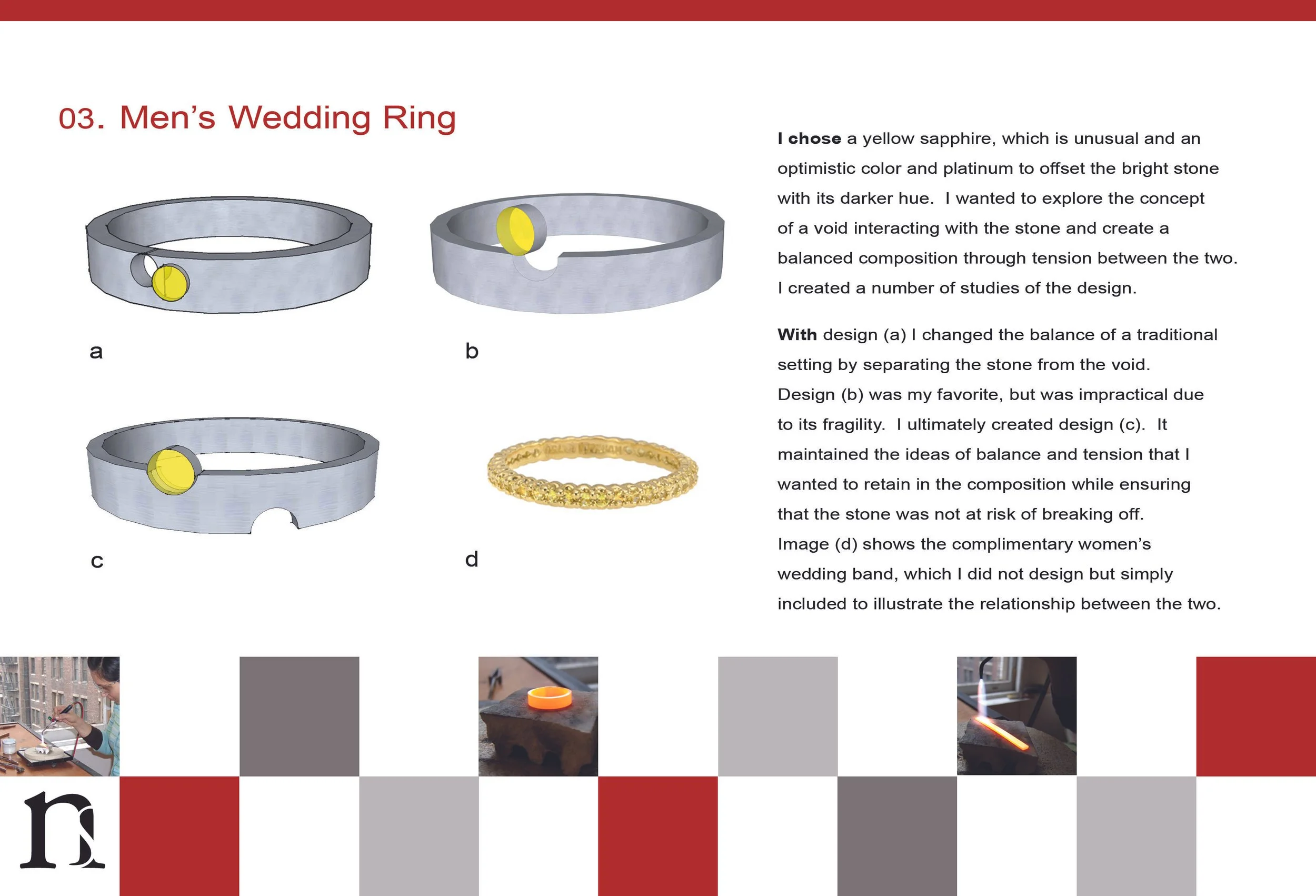
I chose a yellow sapphire, which is unusual and an optimistic color, and platinum to offset the bright stone with its darker hue. I wanted to explore the concept of a void interacting with the stone and create a balanced composition through tension between the two. I created a number of studies of the design. With design (a), I changed the balance of a traditional setting by separating the stone from the void. Design (b) was my favorite, but was impractical due to its fragility. I ultimately created design (c). It maintained the ideas of balance and tension that I wanted to retain in the composition while ensuring that the stone was not at risk of breaking off. Image (d) shows the complementary women’s wedding band, which I did not design but simply included to illustrate the relationship between the two.
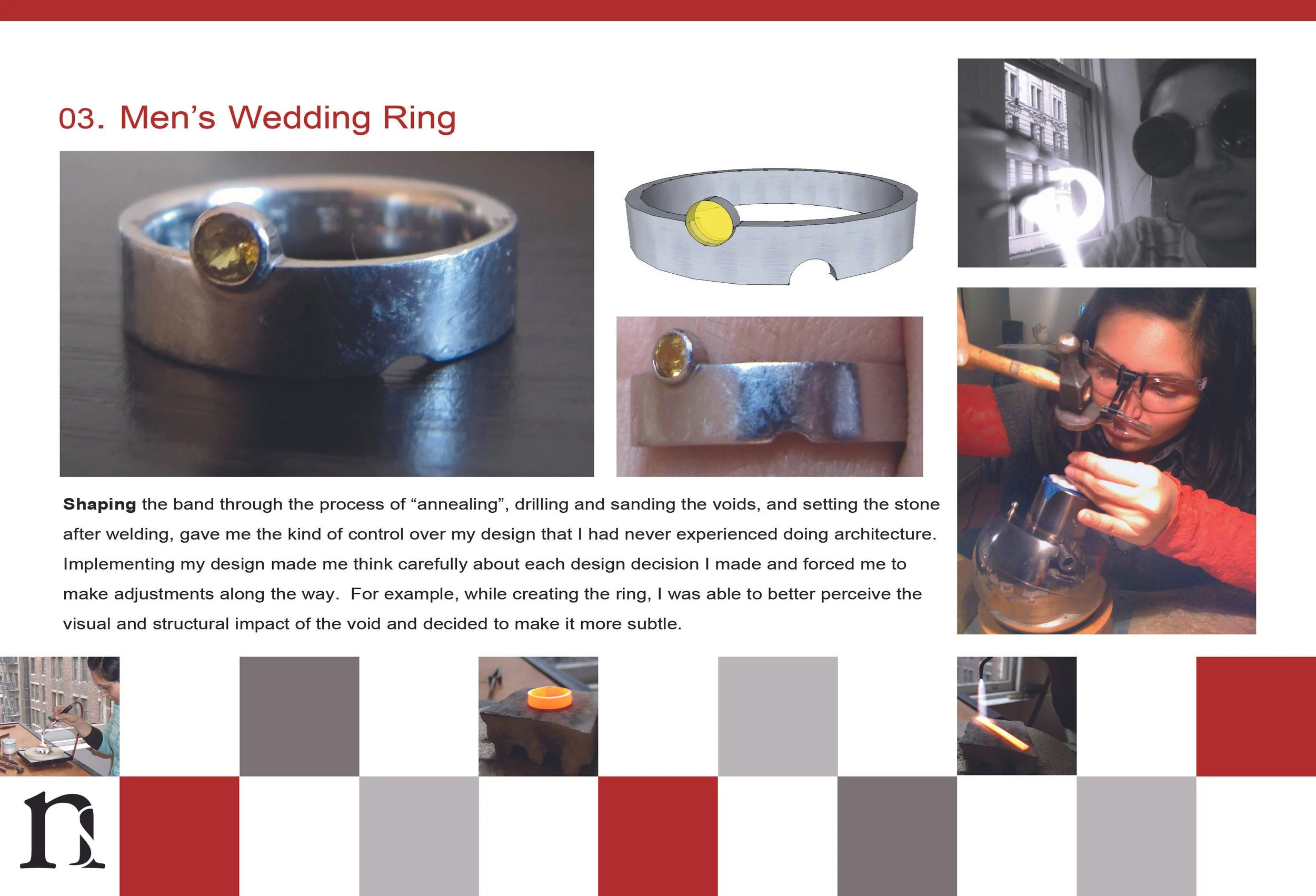
Shaping the band through the process of “annealing”, drilling and sanding the voids, and setting the stone after welding, gave me the kind of control over my design that I had never experienced doing architecture. Implementing my design made me think carefully about each design decision I made and forced me to make adjustments along the way. For example, while creating the ring, I was able to better perceive the visual and structural impact of the void and decided to make it more subtle.
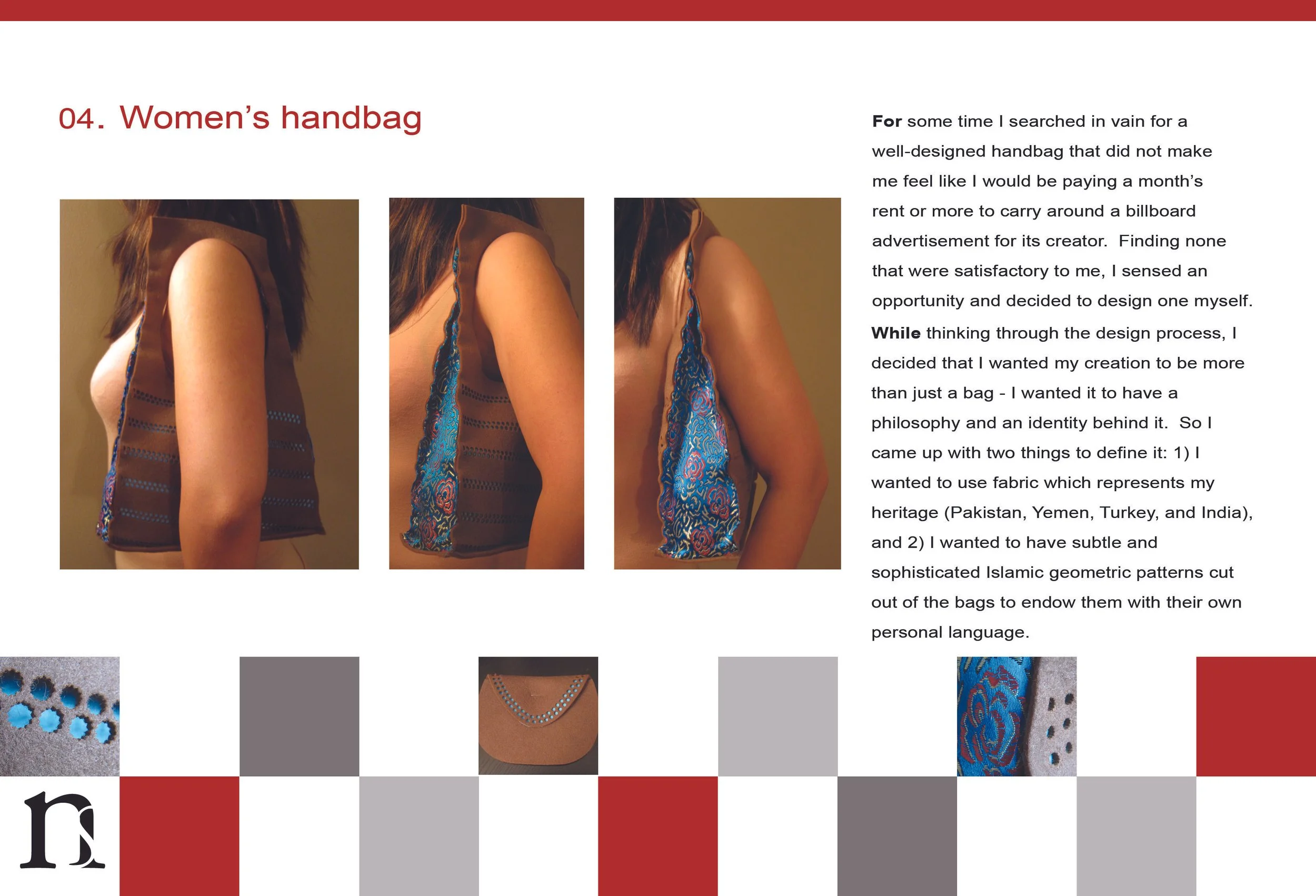
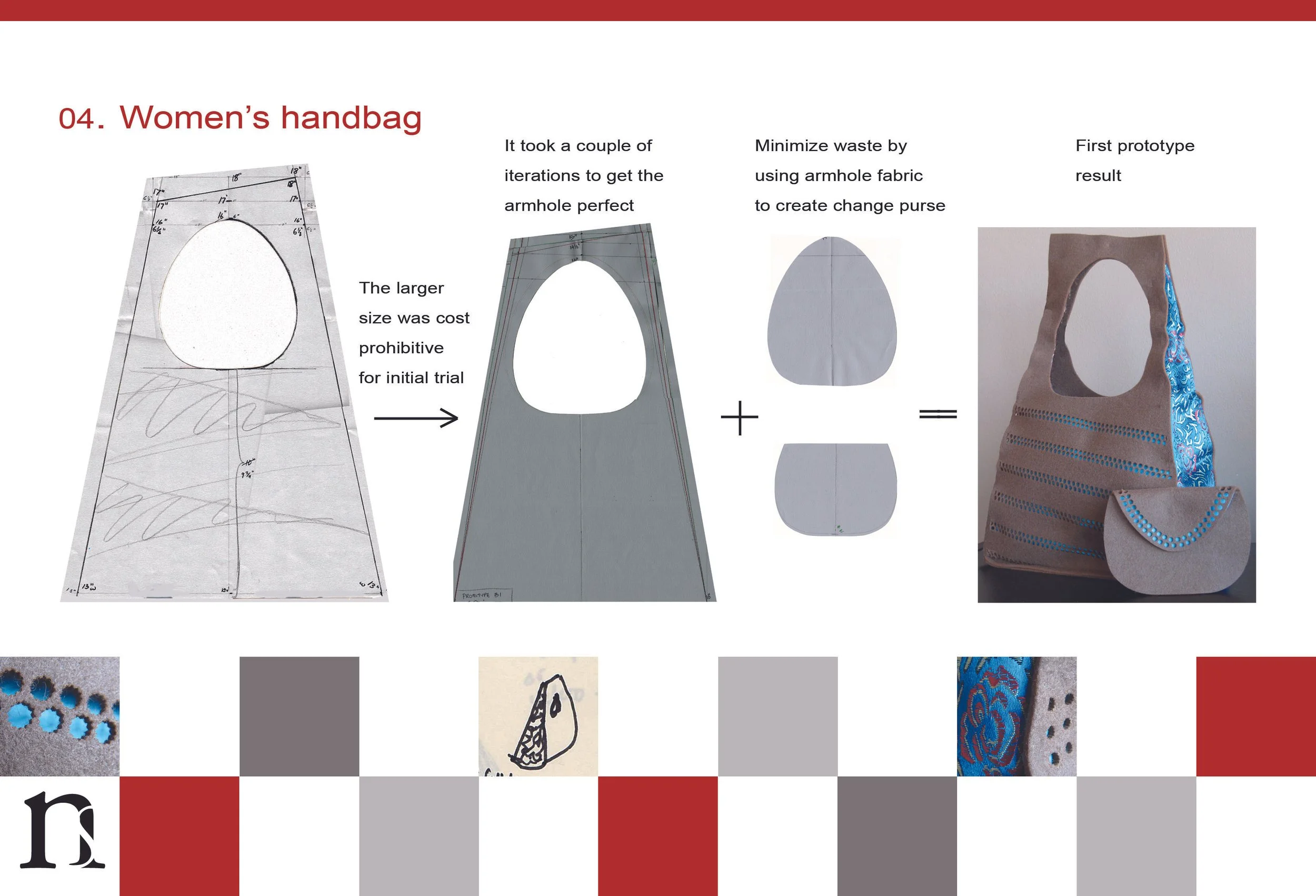
For some time, I searched in vain for a well-designed handbag that did not make me feel like I would be paying a month’s rent or more to carry around a billboard advertisement for its creator. Finding none that were satisfactory to me, I sensed an opportunity and decided to design one myself. While thinking through the design process, I decided that I wanted my creation to be more than just a bag - I wanted it to have a philosophy and an identity behind it. So I came up with two things to define it: 1) I wanted to use fabric, which represents my heritage (Pakistan, Yemen, Turkey, and India), and 2) I wanted to have subtle and sophisticated Islamic geometric patterns cut out of the bags to endow them with their own personal language.
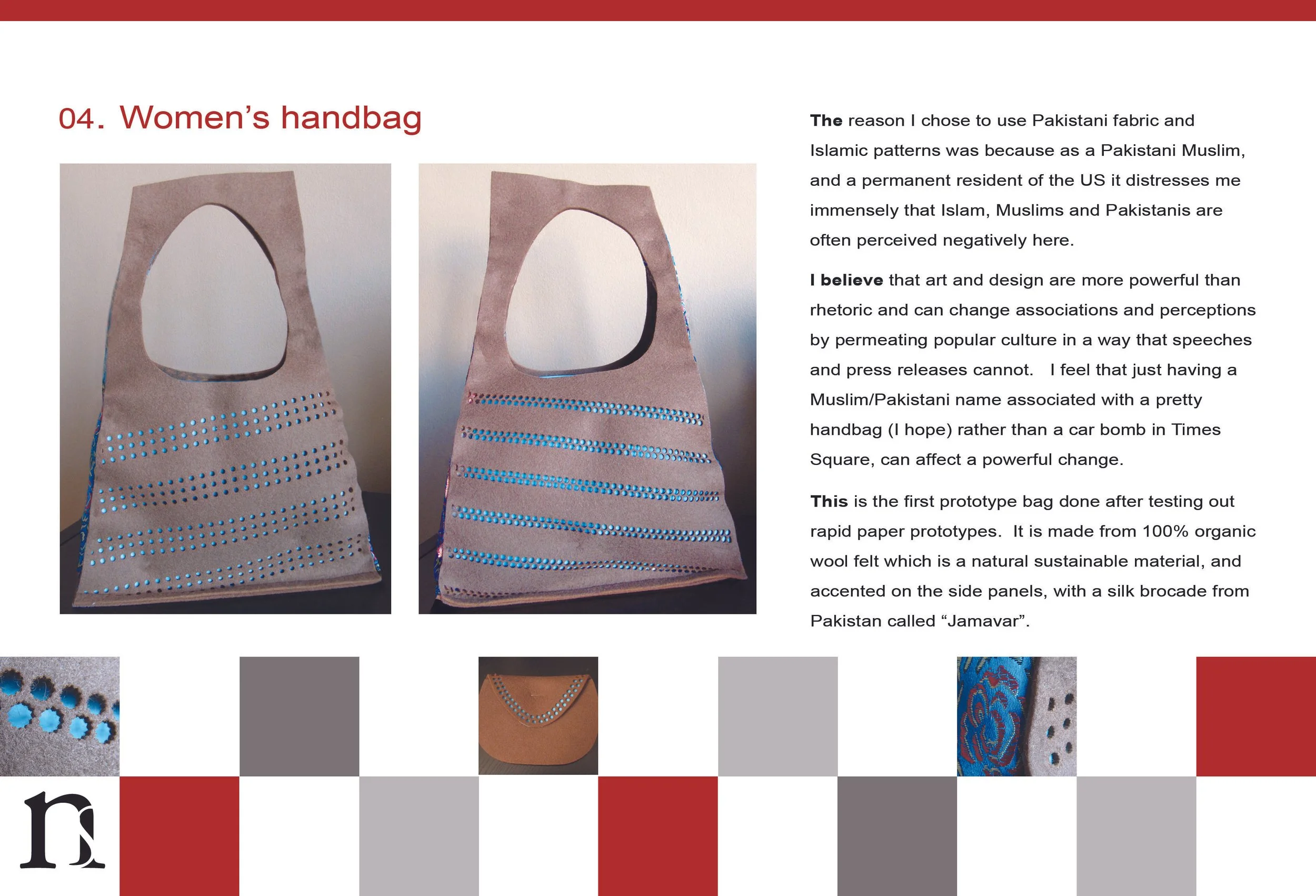
The reason I chose to use Pakistani fabric and Islamic patterns was that, as a Pakistani Muslim, and a permanent resident of the US, it distresses me immensely that Islam, Muslims, and Pakistanis are often perceived negatively here. I believe that art and design are more powerful than rhetoric and can change associations and perceptions by permeating popular culture in a way that speeches and press releases cannot. I feel that just having a Muslim/Pakistani name associated with a pretty handbag (I hope) rather than negative bias from mainstream media can affect a powerful change. This is the first prototype bag done after testing out rapid paper prototypes. It is made from 100% organic wool felt, which is a natural, sustainable material, and accented on the side panels with a silk brocade from Pakistan called “Jamavar”.
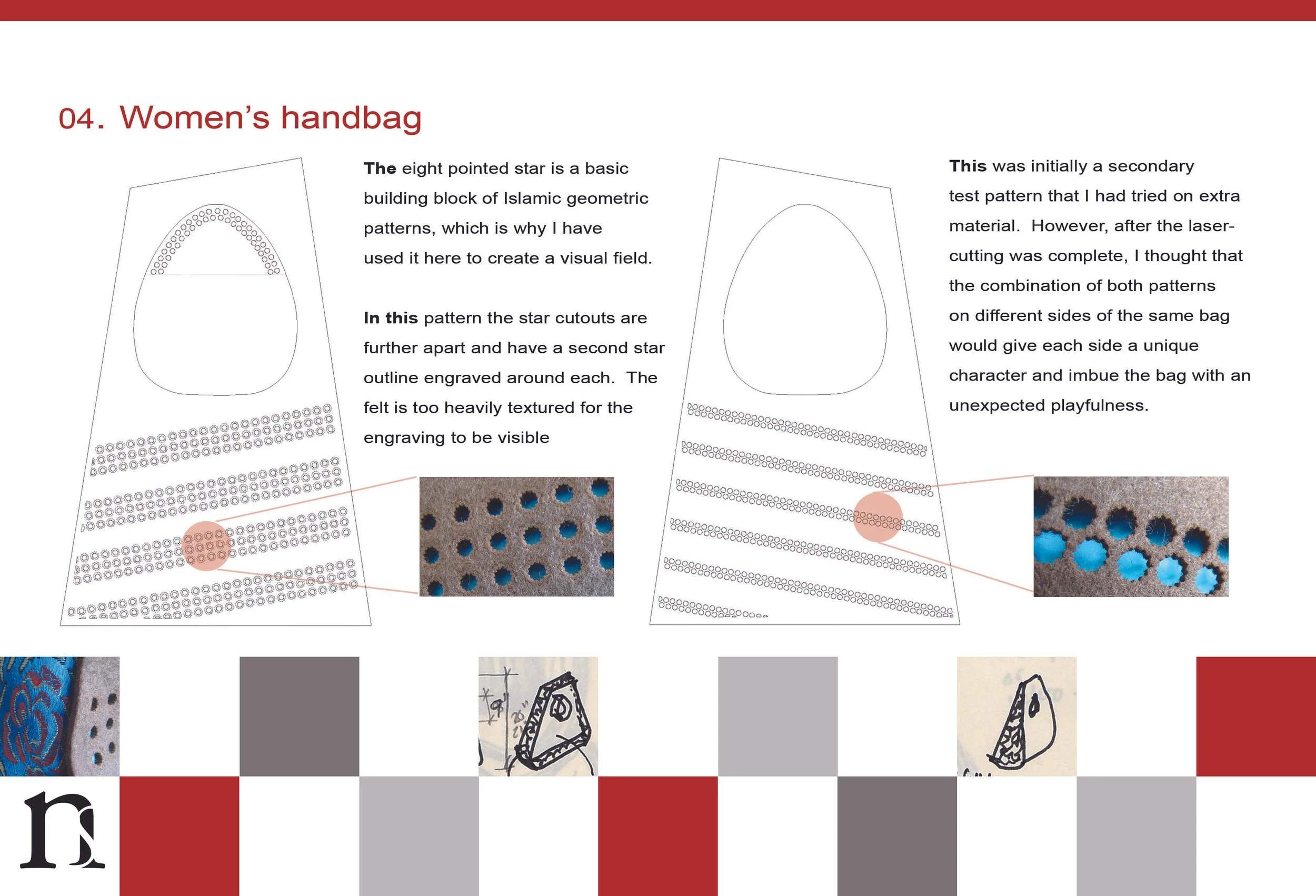
The eight-pointed star is a basic building block of Islamic geometric patterns, which is why I have used it here to create a visual field. In this pattern, the star cutouts are further apart and have a second star outline engraved around each. The felt is too heavily textured for the engraving to be visible This was initially a secondary test pattern that I had tried on extra material. However, after the laser-cutting was complete, I thought that the combination of both patterns on different sides of the same bag would give each side a unique character and imbue the bag with an unexpected playfulness.
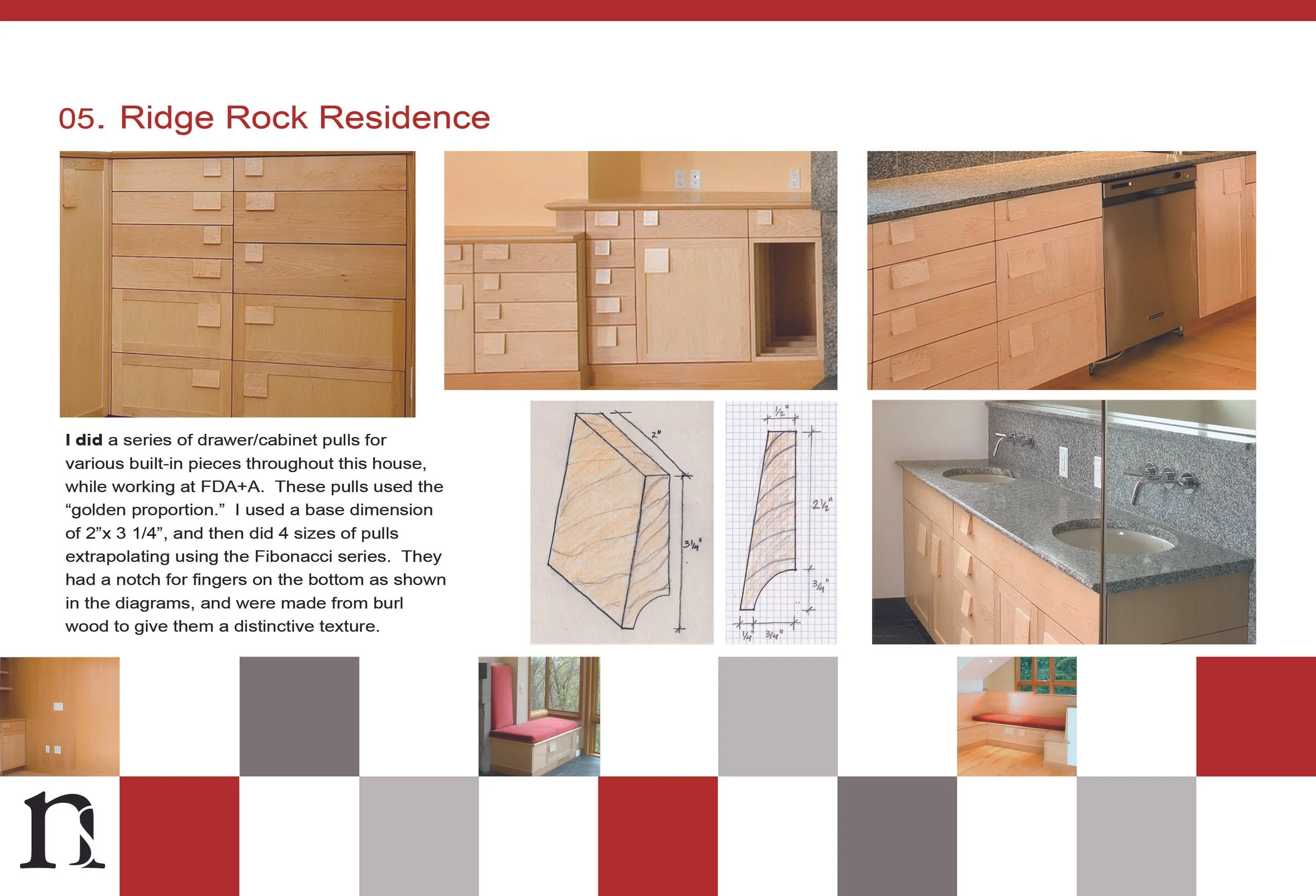
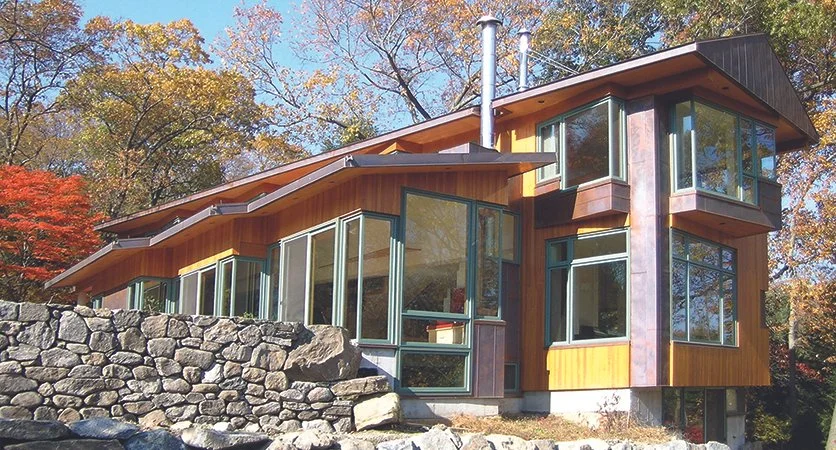
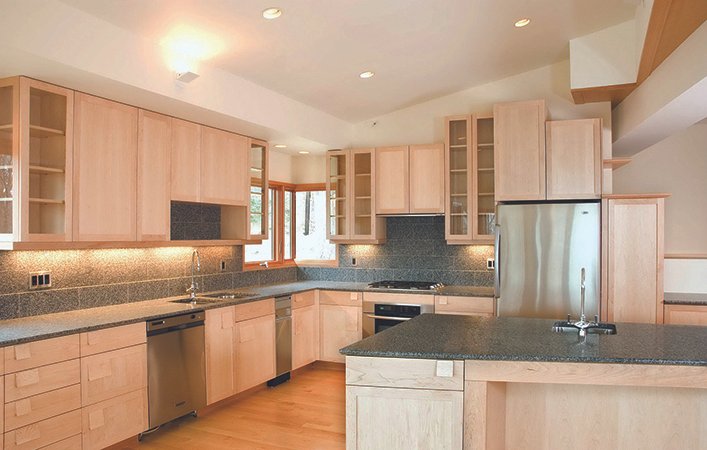
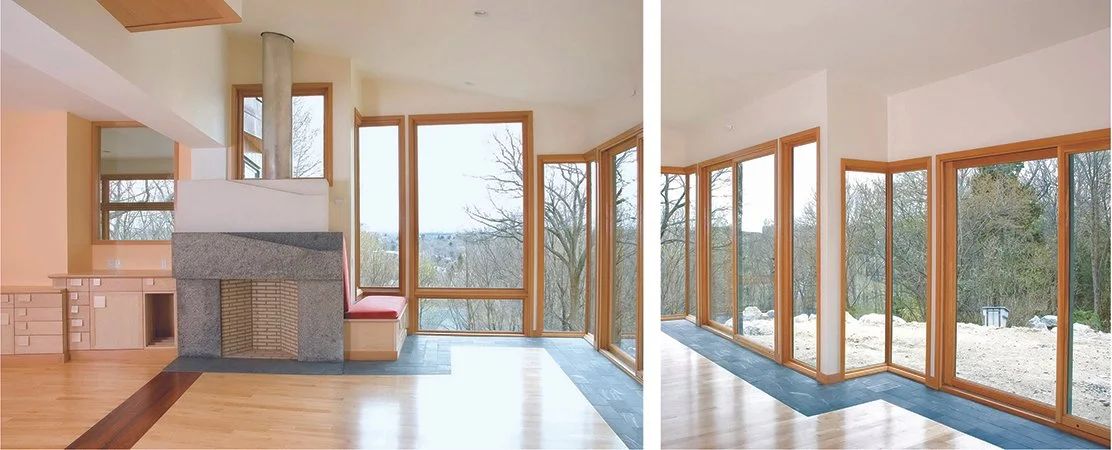
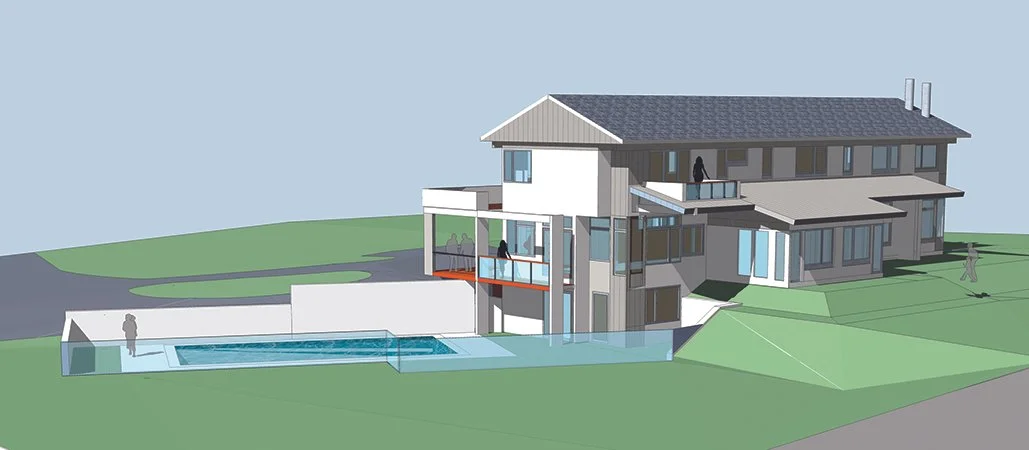
I did a series of drawer/cabinet pulls for various built-in pieces throughout this house while working at FDA+A. These pulls used the “golden proportion.” I used a base dimension of 2”x 31/4”, and then did 4 sizes of pulls, extrapolating using the Fibonacci series. They had a notch for fingers on the bottom, as shown in the diagrams, and were made from burl wood to give them a distinctive texture.
Stakeholders + Collaborators
PM Leads, VP of Product, VP of Design, Design Leads
2 Senior researchers + Research Mgr
I led overall research design and planning with collaborators, and supported the research team in executing each phase and socializing the findings